I used to dread our strategy meetings.
Not because I didn't care about strategy. But because two people on our team would inevitably turn every discussion into a philosophical debate about "what if we tried something completely different?"
Meanwhile, I'm sitting there with my notepad, dying to say: "Can we PLEASE just pick something and make a plan?"
I'd leave those meetings exhausted. Frustrated. Wondering why some people seemed allergic to decisions.
Then I discovered Patrick Lencioni's Working Genius framework, and everything clicked.
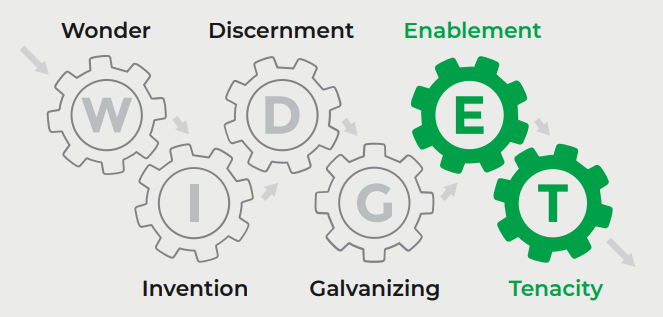
The Six Types of Working Genius
According to Lencioni, there are six types of "genius" required to accomplish any work:
-
🤔 Wonder - Pondering possibilities and asking big questions
-
💡 Invention - Creating new ideas and solutions
-
🎯 Discernment - Evaluating which ideas actually work
-
📢 Galvanizing - Rallying people around an idea
-
🤝 Enablement - Supporting others to get things done
-
✅ Tenacity - Pushing through to completion
Here's the kicker: We each have two that energize us (our geniuses), two that drain us (our frustrations), and two we can do okay for a while (our competencies).
My "Aha" Moment
My assessment revealed I'm "The Loyal Finisher" with Enablement and Tenacity as my geniuses.
Translation: I get energy from helping others succeed and making sure things actually get DONE.
My frustrations? Wonder and Invention.
Suddenly those meeting dynamics made perfect sense. While my colleagues were in their genius zone exploring possibilities, I was in my frustration zone wanting to scream.
But here's what changed everything:
Those "annoying" wonderers and inventors? They were doing exactly what our team needed. Without them, we'd execute brilliantly... on mediocre ideas.
Without me and the other finishers? They'd have brilliant ideas that never saw the light of day.
The Real Problem With Teams
Most teams fail not because people are incompetent, but because:
1. We judge others through our own genius lens
-
Wonderers think Tenacity people lack vision
-
Tenacity people think Wonderers can't commit
-
Both are wrong
2. We force people into their frustration zones
-
Asking your executor to brainstorm for hours
-
Expecting your innovator to manage project timelines
-
Everyone loses
3. We don't honor the full process
-
Every project needs all six geniuses
-
Skip one, and you'll feel it
-
Most teams are lopsided
What This Means For Your Career
Understanding your Working Genius changes everything:
✨ Stop feeling guilty about what frustrates you
-
It's not a character flaw that brainstorming drains you
-
Or that you hate the final push of projects
-
You're wired differently, not wrongly
🎯 Double down on your genius zones
-
Volunteer for work that uses your natural gifts
-
Partner with people whose genius fills your gaps
-
Stop trying to be good at everything
🤝 Reframe team friction as necessary tension
-
That person who always plays devil's advocate? You need their Discernment
-
The one who questions everything? Their Wonder prevents blind spots
-
The cheerleader who seems overly optimistic? Their Galvanizing creates momentum
My New Meeting Strategy
Now when someone starts wondering aloud about possibilities, I:
-
Take a breath and remember they're in their genius
-
Let them explore (for a defined time)
-
Then step into MY genius: "Great ideas! Let me help us create an action plan."
The result? Better ideas AND actual execution.
Your Next Steps
-
Take the assessment ($25 at workinggenius.com - best career investment you'll make)
-
Share results with your team - Even informal sharing creates breakthrough moments
-
Look at your calendar - How much time are you spending in frustration vs. genius zones?
-
Stop apologizing for what drains you - It's data, not weakness
-
If you want to do this as a team, reach out to me for Team Workshops available!
The truth is, we need all six types of genius. The wonderers need the finishers. The inventors need the discerners. The galvanizers need the enablers.
Your frustrating colleague might just be operating in their genius while you're stuck in your frustration zone.
And once you see it, you can't unsee it.
Ready to discover your Working Genius?
The assessment takes 10 minutes and will explain approximately 97% of your work frustrations. (Not scientifically proven, but feels accurate based on my experience! 😂)
💬 Hit reply and tell me: What type of work makes you want to hide under your desk? I bet it's one of your frustration zones.
Until next week,
💛 Alyssa
P.S. If you're leading a team, this framework is gold. Imagine actually assigning work based on what energizes people instead of just their job titles. Revolutionary, right?
P.S.S. If you are interested in doing this assessment as a team, reach out to me and I would be happy to not only take your team through their own assessments, but what the Team Map reveals about your team’s results!





Responses